
For developers

A cheaper number, and a shorter route to it

Off-site BNG is a practical solution when you have the right team to make it work. We're Swift, from start to finish.

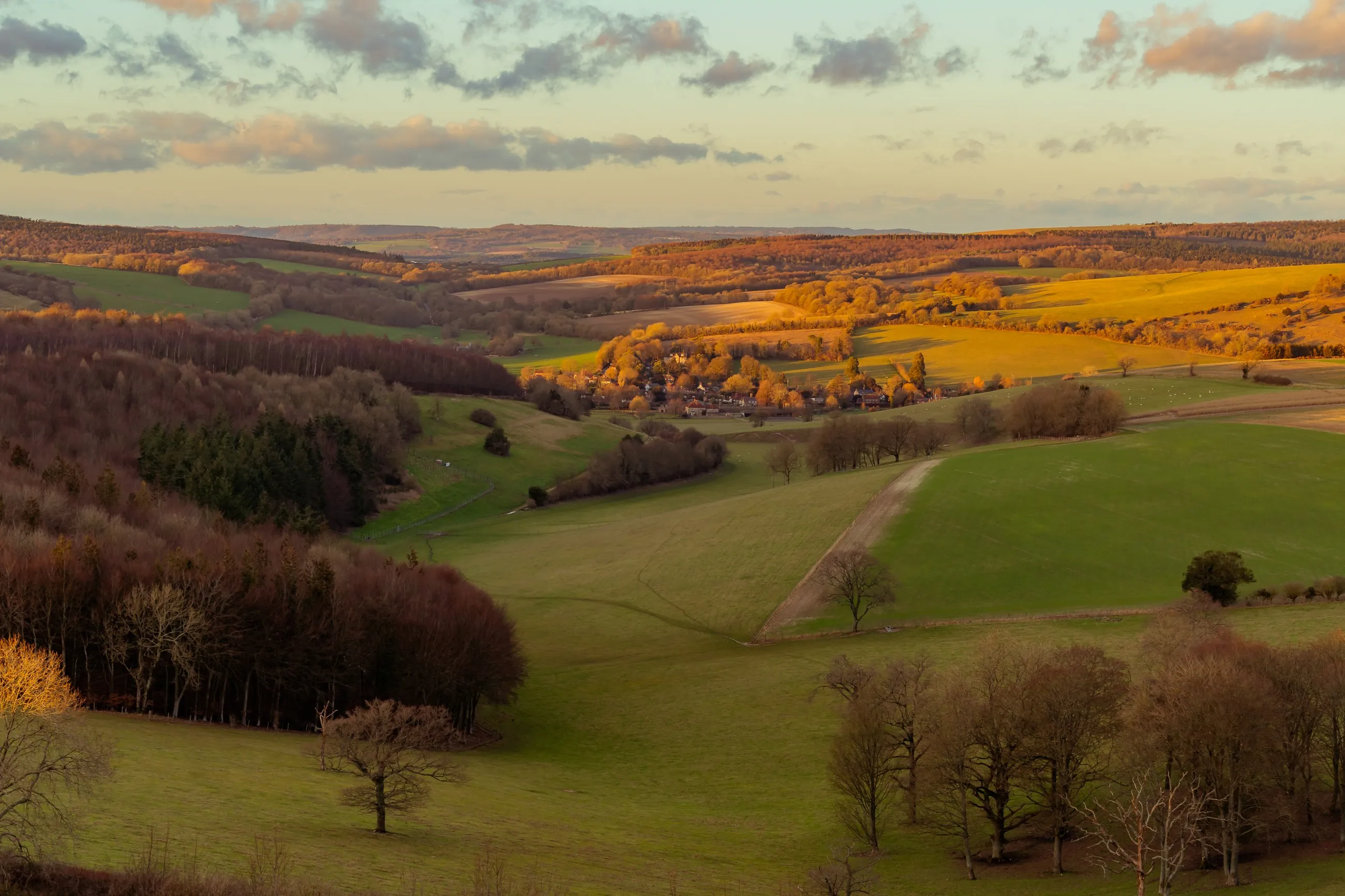
A downland vale in low winter sunlight: hedged pasture, blocks of woodland, and a village along the valley floor.
Why off-site at all

Once your units are allocated, you are finished with it

When you buy BNG units offsite there is no thirty year commitment for you, your obligations end.

Delivering on site

The 10% is only the start of the work. The habitat has to be secured for at least thirty years, managed to a plan, monitored and reported on. That duty has to live somewhere. Usually it is a management company funded by service charge, with you carrying it until adoption and answering for it long after.

If the habitat underperforms in year eight, somebody has to put it right. Residents notice, and so do planning authorities.

Buying off site

Once your units are allocated to the development on the biodiversity gain sites register and your gain plan is approved, your biodiversity obligation is discharged. It does not follow you.

The thirty-year duty to create, manage, monitor and report sits with whoever entered the section 106 agreement or conservation covenant on the habitat bank. If that habitat underperforms, enforcement runs against them.

On a minor development you can now go straight to off-site BNG. Since 6 August 2026 the biodiversity gain hierarchy gives off-site units the same standing as on-site creation for minor schemes.

All of that depends on the allocation being done properly: the right unit types under the trading rules, a properly secured and correctly registered site, and evidence in the form your planning authority will accept. We offer straightforward, well thought out options, clear pricing, and a practical approach to the process.

Cost

Where the savings come from

Four reasons the same compliance tends to cost less, and land more predictably, when you go through us.

01

Talk to us early enough to need less

We understand the complexities of the trading rules and can help you to make smart choices with your design to minimise your end bill.

How a scheme is laid out determines how much habitat it damages, and how much it damages determines what you have to replace. Thinking about that at design stage, rather than after submission, is where the biggest savings are.

02

Options inside the trading rules

The trading rules are more flexible than most people assume. They allow trading up, compensating a loss with habitat of higher distinctiveness, and that sometimes opens routes that are cheaper or faster, or that exist at all when a like-for-like match does not.

It is worth having someone look properly at what your requirement could be met with, not just what it looks like it demands.

03

A deal shaped around your scheme

We negotiate. Price, timing, phasing and payment terms all move depending on the size and shape of what you need, and we will build something that works for everyone involved.

We also offer bespoke enhancements that offer more for your customers and your team. More on that below.

04

Quoted in full, held for three months

BNG unit prices are not stable. The market is young, supply is geographically uneven, and values move — sometimes sharply.

So we quote the whole thing at the outset, with no costs that surface later, and we hold your price for three months. A reservation extends the certainty further while your application is determined.

Where it makes sense

We can build a habitat bank for your scheme

Buying from existing stock is the fastest route. It is not always the best-value one.

If your requirement is large, sits in an area where nobody holds suitable stock, or needs habitat types that are genuinely scarce, creating a bank specifically for it can work out considerably cheaper per unit than assembling the same compliance from whatever happens to be available.

It also solves the spatial problem. A bank secured near your development attracts a far kinder multiplier than units bought two counties away, which means fewer units for the same compliance.

We work with ecology, land and legal specialists who can do this properly, and we will be straight with you about the timescale early, while there is still room to plan around it. Often the answer is a combination: existing units to discharge the condition, with a bespoke bank brought forward alongside.

Two people seated outdoors turning the pages of a printed conservation covenant agreement.
Working with us

Straightforward to deal with

One person, who knows your scheme

You get a named contact with a direct line and an email address that reaches a human, not a portal or a shared inbox. They stay with your purchase from first enquiry through to allocation, and they have the authority to answer rather than to escalate.

We deal with everyone else

An off-site purchase involves the habitat bank operator, the landowner, your planning authority and often a responsible body. Left to arrange itself, that is where weeks disappear, with everyone waiting on someone they have not met.

We coordinate all of it and we own the paperwork. It is the kind of work that looks straightforward until you have done it once.

Reserve now, complete later

Planning timelines are not yours to control. Hold specific units under a written reservation while your application is determined. The deposit is charged against the reservation and comes off the final price on completion; it is not refundable, so the period is set with you against a realistic view of your timetable.

Clean evidence for your gain plan

You get allocation confirmed on the biodiversity gain sites register with the reference your planning authority asks for, presented so the case officer can approve it without coming back with questions. This is the step that makes the discharge stick, so we do not treat it as paperwork.

Deliverables

What you actually get

Everything below comes as standard. None of it is an extra.

At quote
Written quote by unit type and habitat bank, price per unit, the spatial risk multiplier applied, and confirmation of availability. The full cost is stated at the outset and held for at least three months.
At reservation
Reservation agreement with a stated duration and deposit, agreed before anything is paid. The deposit is deducted from the final price on completion and is not refundable.
At contract
Sale agreement, with payment terms set to suit the size of the purchase.
For your gain plan
Your metric updated to show the off-site units allocated, and evidence of that allocation on the biodiversity gain sites register, with the reference your planning authority will ask for.
Afterwards
Nothing required from you. Monitoring and reporting to the responsible body is the operator's obligation for the full period.
Beyond the units

Something to show for it

Your biodiversity gain is in a real place, it's not only a line in a condition. Involve your customers and your team with information and access to our inspiring habitat banks.

  • Information packs

    An uplifting account of the habitat bank your units came from: where it is, what is being created there and what it will look like in thirty years.

    We publish updates from the banks on the blog and on social media as the habitat establishes, so there is something new to point at while the scheme is still selling.

  • Photography

    Pictures and videos of the bank itself, yours to use in brochures, on hoardings and on your website.

  • Open days

    We run open days at the banks and your team and buyers are welcome to visit and get to see what their money has funded.

  • Corporate events

    Site visits for your team, professional development sessions, and events hosted at suitable habitat banks.

Want more? Tell us what would be useful and we will tell you what is possible.

Send the metric, get a number

Or a red-line plan and a rough shortfall if you are earlier than that. Either is enough for us to tell you what it would cost.

Buy BNG units