Nutrient mitigation

Nutrient mitigation for developments in affected catchments

In parts of England, housing cannot get planning permission until the extra nitrogen or phosphorus it would put into a protected river, lake or harbour has been cancelled out. That is nutrient neutrality, and mitigation is how it is met. We provide it, for both nitrate and phosphate, and we explain how it works below.

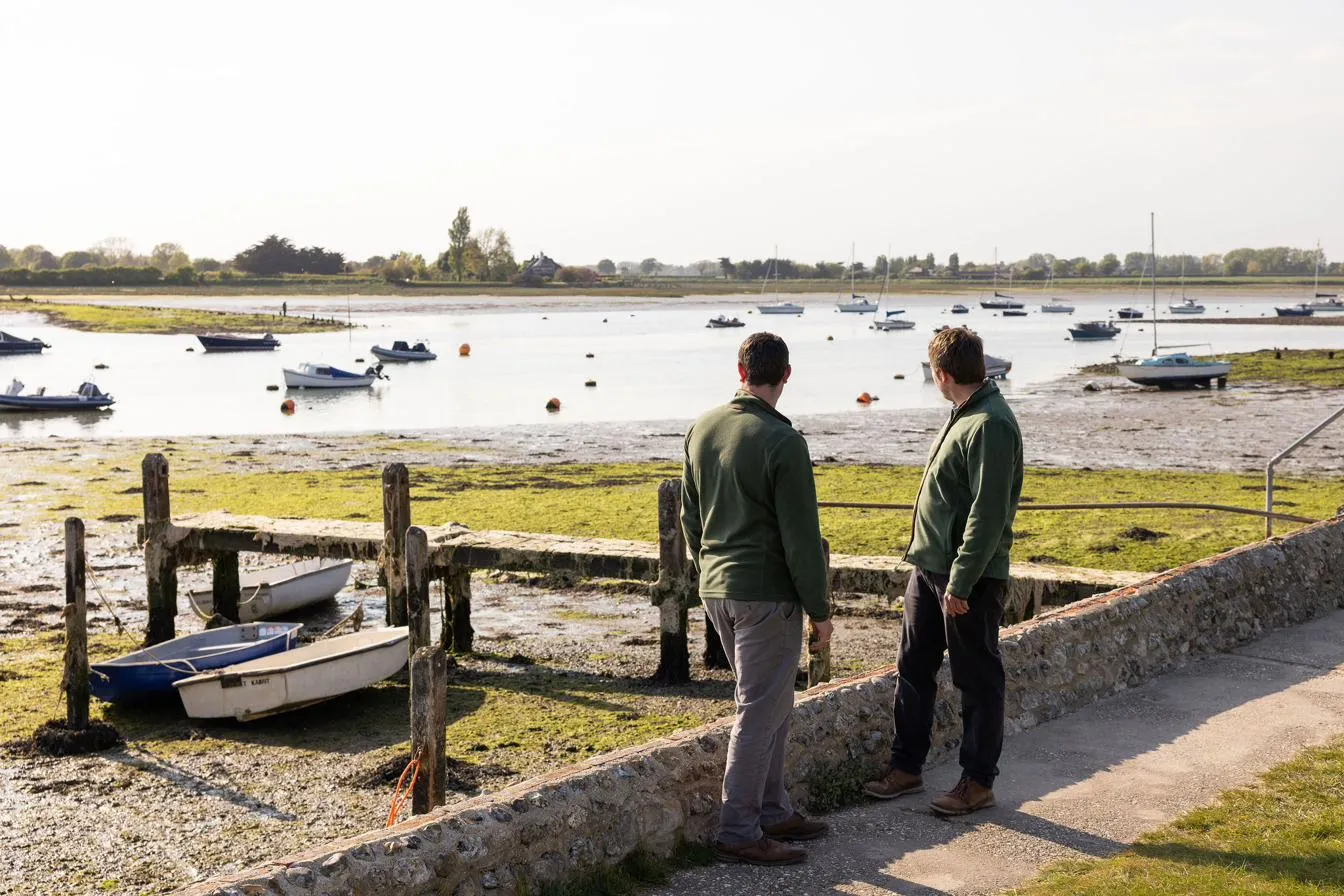
Two people looking out over a tidal harbour at low water, small boats moored beyond the saltmarsh.
What it is

Why some planning applications cannot be approved

A number of rivers, lakes, estuaries and harbours in England are protected under the Habitats Regulations, and several of them already carry more nitrogen or phosphorus than they can cope with. The nutrients come from farming and from sewage, and they cause the algal growth that smothers the habitat the sites are protected for.

New homes add to the load, through the wastewater they produce. So in the catchments of those sites, the local planning authority cannot lawfully grant permission for housing, or for anything else that adds overnight accommodation, unless it is satisfied the development will not make the problem worse. Natural England's advice to the affected authorities is that a scheme has to be nutrient neutral: the extra nutrient load it creates has to be offset by an equal reduction somewhere in the same catchment.

This is not a condition that can be discharged later. The mitigation has to be identified and secured before permission is granted, because the authority has to complete an appropriate assessment under the Habitats Regulations and cannot conclude it without a solution in place. Where no mitigation is available, the application waits.

Where development is held up

That waiting is the real cost of nutrient neutrality. In several authorities, schemes with every other consent in hand have sat for months, sometimes years, because there were no mitigation credits to buy in the catchment. Herefordshire, in the Wye and Lugg catchment, and the authorities around the Somerset Levels have both seen thousands of homes stalled this way. The Solent authorities and East Kent have had long queues at times, and smaller catchments can be tighter still, because there are fewer schemes generating credits.

The constraint is nearly always supply in a particular catchment rather than process. Where credits exist, the calculation and the legal agreement can move quickly. Where they do not, nothing else about the application matters until they do.

The catchments

Affected catchments in England, and which nutrient applies

Natural England's advice covers a set of protected sites and the authorities in their catchments. Whether a scheme has to offset nitrogen, phosphorus or both depends on which site it drains to. Check the current position with your planning authority or with us: catchment boundaries do not follow council boundaries, and the list is updated.

Protected site / catchment Nutrient to offset Broadly where
Solent Nitrogen South Hampshire and the Isle of Wight, including Portsmouth, Southampton, Fareham, Gosport, Havant, Eastleigh and the New Forest
Stodmarsh Nitrogen and phosphorus East Kent: Canterbury, Ashford, Folkestone & Hythe, Dover, Maidstone
Somerset Levels and Moors Phosphorus Somerset, including Taunton, Bridgwater and Yeovil catchment areas
River Wye and River Lugg Phosphorus Herefordshire, and parts of the Wye catchment beyond it
Poole Harbour Nitrogen Dorset, including Poole and the Frome and Piddle catchments
River Avon (Hampshire Avon) Phosphorus Wiltshire, Hampshire and Dorset along the Avon
River Camel Phosphorus North Cornwall
Teesmouth and Cleveland Coast Nitrogen Tees Valley: Stockton, Middlesbrough, Redcar & Cleveland, Hartlepool, Darlington
River Eden Phosphorus Cumbria, Eden valley
River Kent Phosphorus South Cumbria around Kendal
Lindisfarne Nitrogen Northumberland coast
Norfolk Broads and River Wensum Nitrogen and phosphorus Norfolk, including Norwich, Broadland and South Norfolk
Pevensey Levels Nitrogen and phosphorus East Sussex: Wealden, parts of Eastbourne and Rother
River Mease Phosphorus Leicestershire, Derbyshire and Staffordshire borders

List and nutrient columns to be checked against the current Natural England advice before launch; entries with an underline have not yet been confirmed. The Planning and Infrastructure Act 2025 is moving catchments onto Environmental Delivery Plans over time. Until an EDP covers your catchment, the position above stands and private mitigation is the route.

How it is met

What nutrient mitigation looks like

Taking land out of intensive use

The most common source of credits. Arable or intensively grazed land in the catchment is converted to grassland, woodland or wetland and secured for the long term, and the nutrient load it no longer produces becomes the credit a development buys.

Constructed wetlands

Treatment wetlands that strip nutrients from water before it reaches the protected site. They can generate a large number of credits from a small area, but they take design, land and time.

Upgrading treatment

Replacing septic tanks or package treatment plants with connections to mains sewerage, or improving what a works discharges. Effective where the opportunity exists, which is site by site rather than at scale.

On-site design

Sustainable drainage, water efficiency and the choice of treatment all reduce the budget a scheme has to offset. They rarely get a development to neutral on their own, but they reduce how many credits it needs to buy.

What we do

Mitigation from Swift BNG

We provide nutrient mitigation for both nitrate and phosphate. Where we have a scheme with capacity in your catchment, it is a straightforward purchase of credits, secured by a legal agreement the planning authority will accept. Where we do not, or where the scheme is large or unusual enough to need its own answer, we put together a bespoke solution: land sourced, the mitigation designed and secured for that development.

Most of what we do here is bespoke. Which route applies comes down to where you are and how big the scheme is, so the useful first step is to tell us the site, the catchment if you know it, and the number of homes. We will come back with what exists and what it would take.

If you also need biodiversity net gain units, which most schemes in these catchments do, we handle both together.

Common questions

Nutrient neutrality questions

Does nutrient neutrality apply to my scheme?

If the site drains to one of the protected catchments above and the development creates overnight accommodation, almost certainly yes. Houses, flats, care homes, hotels, student accommodation and holiday lets are all caught. Commercial floorspace usually is not, unless it adds to wastewater in a way the authority has to assess.

How is the nutrient budget worked out?

Natural England publishes a calculator for each catchment. It takes the number of dwellings, the occupancy rate, the water use per person, the treatment works the scheme drains to and the current use of the land, and produces a figure in kilograms of nitrogen or phosphorus per year. Mitigation has to cover that figure, with a precautionary buffer on top.

Can mitigation be in a different catchment?

No. The offset has to reduce the load reaching the same protected site, so it has to sit in the same catchment as the development. That is why supply is so uneven from one area to the next.

How long is mitigation secured for?

Usually in perpetuity, or for the lifetime of the development it offsets, depending on the catchment and the authority. It is a longer commitment than biodiversity net gain, and the legal agreement reflects that.

What has the Planning and Infrastructure Act changed?

The Act introduced Environmental Delivery Plans and the Nature Restoration Fund, which over time will provide a catchment-scale route with a levy in place of scheme-by-scheme mitigation. That transition is under way rather than complete. Until an EDP covers your catchment, private mitigation remains the practical route to unlocking a stalled site.

Stuck on nutrients?

Tell us the site, the catchment and the number of homes. We will tell you what mitigation exists and what it would take to get the application moving.

Buy BNG units